
Gardener Norbiton — Recycling and Sustainability in Our Green Work
At Gardener Norbiton we place recycling and sustainability at the centre of every project. Our approach to creating an eco-friendly waste disposal area and a sustainable rubbish gardening area is practical, measurable and community-focused. We combine hands-on garden care with smart waste management so that soil, green waste and reusable materials stay in the local circular economy rather than heading to landfill.

Our recycling percentage target and borough approach
We maintain a clear target: to achieve a 65% recycling rate for garden and household-type waste from our operations by 2030. That target reflects an ambition to exceed local averages and align with progressive borough strategies. Many local boroughs operate a mixed approach to waste separation — kerbside collection of dry recyclables (paper, card, tins, plastics), separate glass and communal food/garden waste, and delivery to territorial transfer stations for further sorting — and we adapt our on-site practices to match these systems.
Local transfer stations and civic amenity links
We make use of nearby civic amenity sites and borough transfer stations to ensure materials are processed correctly. Where possible we consolidate loads to reduce trips and maximize vehicle efficiency. Typical local facilities we use include:
- Kingston Reuse & Recycling Centre (Tolworth area and civic site access)
- Surbiton Civic Amenity Site and neighbouring borough transfer points
- Merton and Richmond transfer stations for bulky green waste and soil testing reception
Using these transfer hubs helps Gardener Norbiton ensure green waste goes to composting or anaerobic digestion, inert materials are handled safely, and reusable goods are diverted to charitable partners.
Partnerships with charities and social enterprises are central to our reuse strategy. We don’t just collect; we rehome. We work with local and national charities — including furniture and tool reuse charities, community gardening groups, and food redistribution networks — to place useful items back into the community.
How charity partnerships work in practice
Our collaborations include material donations, swap days and volunteer-driven repair events. Through partnerships with community organisations, Groundwork-style initiatives and local reuse groups, items such as planters, trellises and soil bags are diverted from waste streams and given a second life. We also support local social enterprises that accept plantable containers and reclaimed timber for community projects.

Low-carbon fleet and transport efficiency
Gardener Norbiton is moving towards a low-emission delivery model. Our fleet includes electric vans and hybrids where possible, plus cargo bikes for short, central routes to reduce emissions in residential streets. We use route optimization software to combine jobs, minimize empty runs and coordinate trips to transfer stations, which helps lower our carbon footprint while keeping costs down.
We aim to transition to a 100% low-emission fleet for short-range urban work by 2030 and to maintain an ongoing programme of vehicle electrification and driver eco-training.
Sustainable rubbish gardening area: on-site practices
On-site, our sustainable rubbish gardening area is set up to separate and process materials effectively. Typical actions include:
- Segregated containers for green waste, woody material, and mixed recyclables
- In-vessel and bay composting for green cuttings and hedge trimmings
- Mulching and chipping to turn branches into soil conditioners
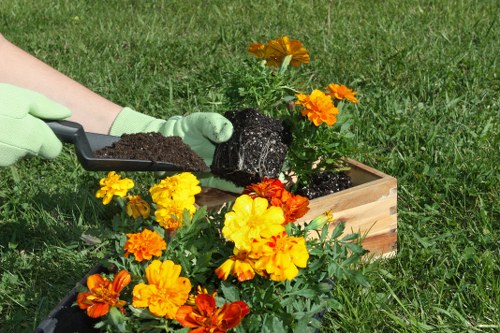
We also recover usable soil and amend it with compost rather than replacing it, reducing the need for new peat-based products and encouraging circular gardening.
Regular audits of waste types and volumes allow us to refine separation practices and identify items that can be reused or donated.
Education, monitoring and borough alignment
Education of staff and clients is vital. Every team member receives training on waste separation, contamination reduction and the boroughs’ approach to recycling streams. We publish simple labels and colour codes on-site so garden waste, food-contaminated material and dry recyclables are easily identified.
We monitor progress through data collection: tonnes diverted, percentage recycled, number of charity items donated, and the carbon savings from our low-carbon vans. These metrics inform our rolling improvement plan and demonstrate the practical benefits of an eco-friendly waste disposal area.
Making local green change
Gardener Norbiton believes small changes add up. By integrating a clear recycling target, strategic use of transfer stations, sustained charity partnerships and investment in low-emission vehicles, we create practical, replicable models for sustainable gardening. Our multi-faceted approach — from compost bays and mulching to cargo bikes and coordinated transfers — keeps material moving into productive reuse pathways and supports the boroughs’ waste separation frameworks.
Join us in promoting circular gardening and responsible disposal: choose sustainable practices, support local reuse partners and look for service providers who prioritise an eco-friendly waste disposal area and a resilient sustainable rubbish gardening area that benefits soil, biodiversity and the community.